The High Price of Perfect Pixels
Living with a 240Hz 4K QD-OLED monitor is a dangerous experiment in hardware standards. After months of testing the Alienware AW2725Q, the reality has set in: once you experience the infinite contrast and adaptive refresh rates of high-end OLED, returning to a standard IPS display feels like watching a dull, stuttering compromise.
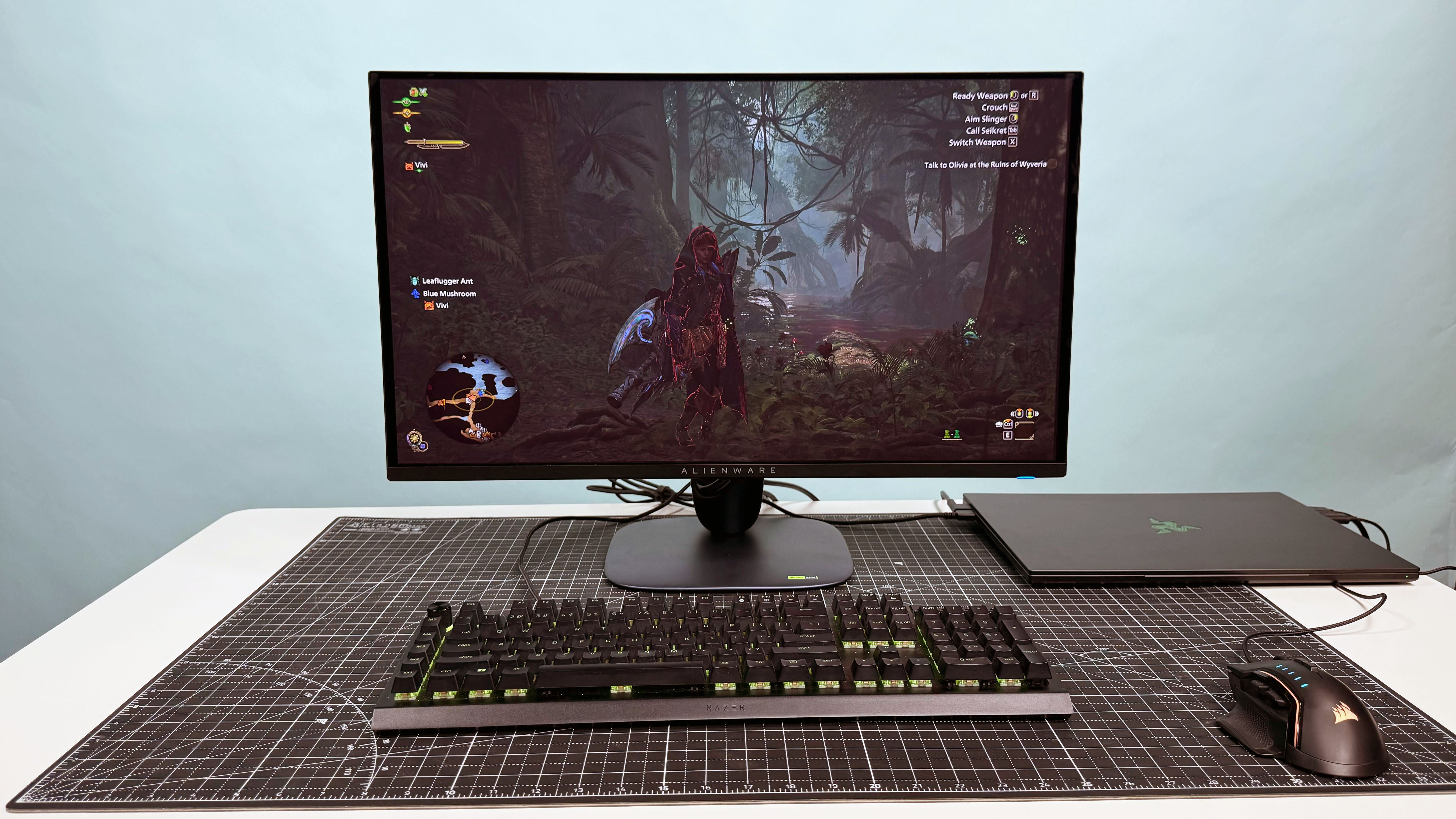
The Alienware AW2725Q, retailing for roughly $900, sits at the center of a new wave of gaming displays sharing a high-performance Samsung panel. While the monitor offers a visual experience that makes Night City in Cyberpunk 2077 pop with vibrant neon and deep, true blacks, it is not without friction. For professional tasks, the lack of a built-in KVM switch and single-cable USB-C connectivity makes it a regression compared to more utilitarian office displays. Navigating the Dell ecosystem, including the cumbersome Alienware Command Center and occasional wake-from-sleep bugs, adds a layer of frustration to an otherwise premium piece of hardware.
Gaming performance, however, tells a different story. Even when paired with a mid-range PC, the monitor’s variable refresh rate technology masks frame rate inconsistencies that would otherwise manifest as jarring screen tearing. After upgrading to a Ryzen 7 9800X3D and a 4070 Super, the fluidity provided by the 240Hz panel and adaptive sync transformed the experience of demanding titles. The trade-off is clear: while a standard 60Hz IPS monitor remains perfectly adequate for spreadsheets and browser tabs, the visual fidelity of OLED has effectively ruined the "good enough" standard. Opting for a luxury display is a slippery slope, and for those who value motion clarity and color depth, the $900 entry price—or the $1,200 required for more feature-rich competitors—is increasingly difficult to justify avoiding.
Comments (0)
No comments yet. Be the first!